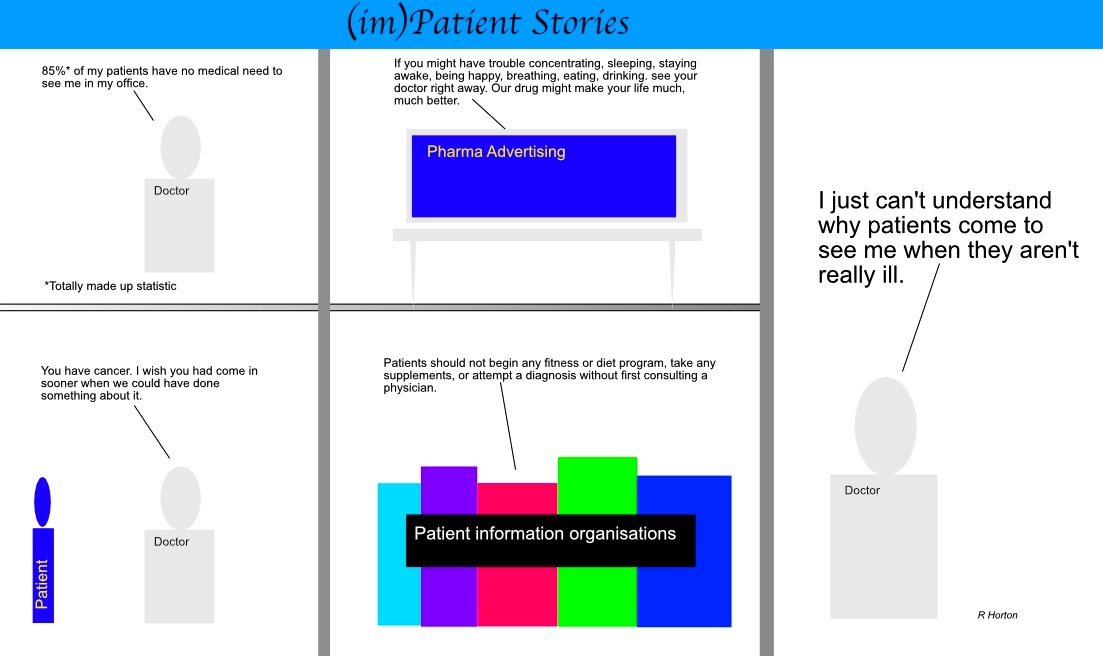
Payment as Coercion: Researchers Versus Research Participants

In the world of medical research, ethicists say it is unethical to pay a substantial amount of money to research participants. If you give a hefty sum for participation, people might sign up for risky research that they would otherwise avoid, so they can only receive minimal compensation for their time. Large payments exploit them and violate their autonomy by removing their ability to refuse participation. Of course, people with little money and few resources will sign up for risky experiments, anyway, because they need the money, even if the sum is paltry. Poverty reduces one’s autonomy and makes one ripe for exploitation, unfortunately.

The other way to look at it, of course, is that individuals are participating in research that may yield lucrative products, may cause unpleasant or harmful side effects, and may be quite inconvenient, indeed. For loaning their bodies to this unpredictable, but likely profitable, enterprise, it might make sense to compensate them more generously for their time and willingness to risk their own health. After all, it is common for workers who engage in other types of risky work to be compensated above normal pay scale. So, I say the industries should compensate their research participants in ways that are commensurate with the risk and inconvenience they are accepting.

Finally, if payment is coercive for research participants, surely it is coercive for researchers as well. Even workers with six-figure salaries can be exploited and manipulated with large sums of money and other favors. Without large payments, doctors and researchers might well be doing the work they are doing, but surely large payments (much larger than any research participant ever gets) must compel them to conduct their research in ways they would not in the absence of such large payments. We might say they have, in effect, had their autonomy stripped from them through coercive payments.

And so it goes.

How the Affordable Care Act has Affected Lives

The following was written in response to a Republican politician’s request for stories about how the Affordable Care Act has affected constituents. He was hoping for horror stories, but many people are depending on the ACA for life-prolonging treatment. Her story is here:

In December 2015, our adult daughter began to have debilitating headaches. Then one morning she woke up and couldn’t focus her eyes. She saw her optometrist who sent her to an ophthalmologist who sent her to a neurological ophthalmologist. But it was the end of the year, and her insurance plan was discontinued, and she had to switch plans and start over with all new doctors. I’ll make a long story short. It took 10 months and too many tests and doctors to count for her to be diagnosed with pseudo tumor cerebri, a neurological condition that is characterized by increased intracranial pressure. The pressure was so great that it increased the pressure on her optic nerves and optic disks causing her eyes to cross. She was forced to wear prism lenses over her glasses to avoid seeing double.

After a while, even those weren’t sufficient for her to see well. With treatment, the pressure was reduced, but her eye muscles were damaged, and last December she had extensive eye surgery to straighten her eyes. They are still well aligned (thank God), but the pressure in her optic nerves and her right optic disk have begun to rise again. She is scheduled to have more tests to try to determine if she can have some stents placed to keep the pressure down. She is on some very strong drugs that have significant side effects, but she is managing. She also is facing having regular lumbar punctures or having a permanent shunt placed to keep the volume of cerebrospinal fluid down.

Our daughter works in a skilled professional position but is hired on a contract basis and has no benefits. She was only able to get health insurance through the ACA marketplace. If she hadn’t had that insurance, she would probably either be blind or dead by now. Even if we had sold our home and cashed out our retirement, we probably could not have paid for more than 1 to 2 years of her medical expenses. Is the system perfect? No! But it saved my child’s life. I’m sure that there are many similar stories. So, obviously, I am a supporter of the ACA. Its repeal would have devastating results for so many people.

Personally, I believe that the problem lies with giving too much power to the private insurance companies. Maybe that’s a political judgement; I’m not sure. What I know is that the CEO of our insurance company, Aetna, makes over $40,000,000 each year. I cannot begin to image how that is merited.

I suspect that you are a supporter of the state high risk insurance pool. Here is a link to an article that reviews those pools, and the results are disturbing.

I ask that you read it with an open mind. I know that there are problems with the ACA, but I also know that the ACA has ensured coverage for millions of people who would otherwise have NO care at all. PLEASE, do not repeal this life-giving law.


Ask an Ethicist: Expanding Fast-Food Outlets

Just to be clear, I wrote both the question and answer for this.

Question: I’m a CEO of a large fast-food chain. Obamacare (or the Affordable Care Act) requires me to provide health insurance to employees working more than 30 hours each week. Providing insurance is expensive and I would rather not have to hire so many part-time workers to avoid providing benefits. If Obamacare is not repealed, I won’t be able to expand and create more jobs. How can I ethically expand my business without incurring more expenses?

Answer: Any law that prevents you from opening more outlets should be expanded, but that’s just my opinion. Limiting the number of restaurants you open will encourage locally-owned businesses and aspiring entrepreneurs to open their own establishments serving their friends and neighbors. Chains such as yours destroy local economies and limit workers to minimum-wage jobs with no benefits.

What happens as a result of your not offering health insurance and other benefits? The most obvious consequence is that your employees are likely to not be able to go to the doctor, so they will be sicker, and they will come to work sick because you also do not offer them sick time. Having employees work while they are sick might help explain why noroviruses spread so quickly, but I don’t guess you are concerned with that.

Keeping employees part-time to avoid giving them benefits also means that they must work more than one job in order to survive. This in turn means they are not available to their families and cannot pursue further education. The system you want to maintain keeps workers sick, uneducated, tired, and disconnected. While having a constant pool of desperate job applicants probably sounds like a business bonanza to you, it has consequences. If you haven’t noticed, societies filled with people unable to develop personally and professionally, care for themselves, or seek leisure activities are unhappy societies, and that affects everyone.

What would happen if you provided health insurance? Your employees could afford to work only one job. You could have a more stable workforce, meaning your employees would be more reliable, better trained, and more prepared for advancement. It would mean your employees could get treatment for illnesses and come to work in better health. If you and other businesses provided health insurance, it would mean workers would have more income. More money for workers means expanding markets. And that means you may be able to open a few more outlets after all.

Seeking Truth through Social Media

Not too many years ago, serious people were holding workshops and seminars touting the transformative power of social media. Twitter and Facebook were new tools that could expose more people to critical information about politics and social justice, raise awareness of suffering and human rights abuses, and organize activists to check and even overthrow tyrannical governments. Now, those same serious people mock online “slacktivists” who think for a moment that Tweeting or sharing on Facebook does anything to make the world a better place.truth

So much difference a few years can make. It didn’t take long for government and corporations to seize control (or tighten control, as they already controlled the entire system) of the information flow on the Internet. Worse, government agencies, police forces, and corporate legal departments used information from social media to track and punish activists.

Worse still, various groups for diverse reasons poisoned the supply of information on the Internet till it was next to impossible to separate factual information, propaganda, satire, and hoaxes. Enough professional journalists from respected news outlets have been exposed for plagiarism and fabrication to make readers and viewers suspicious of all news outlets, and some people now actually believe that propaganda mills are more reliable than once-trusted journalistic outlets.

Further, accusations of plagiarism, ghostwriting, and fraud have even plagued scientific and medical journals, raising legitimate suspicions about the reliability of scientific literature. With major papers being retracted in large numbers in pharmaceutical and medical journals, it becomes more believable for some that climate scientists may be perpetuating some kind of elaborate hoax. While experts are clearly more qualified to evaluate the quality of scientific data than untrained observers, sadly, most people feel they are quite competent to pass judgment on scientific work. “Everyone has a right to an opinion” has become, “All opinions should be taken equally seriously.”

In spite of constant assaults on truth, we still share information, because that is part of what humans do. The human appetite for information has resulted in some positive developments. Scientists are demanding more transparency and data sharing. Independent groups are publicizing retractions, publishing data that contradicts earlier published reports, and demanding that funding sources be revealed. Journalists are holding each other and public officials to greater scrutiny, and many are realizing the importance of good investigative journalism. And members of the “general public” are taking greater care to check sources and look at new information skeptically.

Still, misleading information such as propaganda often comes from powerful sources, and it will not go away. Perhaps, though, we will see a revival of skeptical inquiry and analysis. Perhaps more people will begin to follow the advice to hold beliefs only in proportion to the available evidence.

In the meantime, I see no reason to mock those who find information and post it on social media, even if that is all they do for the cause. Social media “slactivism” may seem like the least one can possibly do, but for some it is also the most they can do. If someone doesn’t have the time, energy, or skills to do more, then so be it.

April is the Cruelest Month: Help Prevent Suicides

I’m a depressive. It has been some time since suicidal ideation, depersonalisation, and derealisation enveloped my pshche and smothered me in a warm fog. Still, being a depressive is like being an alcoholic. It never really goes away. “My name is Randall, and I’m . . . .”

When my depression comes, it usually greets me in early spring along with the new blooms of fresh gardens and reinvigorated old trees. I have no idea why spring is such a difficult time for those of us who struggle with depression, but I do know I am not alone. When most non-depressives think of depression and seasonal sadness, they think of winter when the skies are dark and the holidays strain the resilience of family ties and over-burdened budgets. But it is spring that brings the spike in suicides.

I don’t think anyone can say for sure why suicides peak in the spring. Some say it is due to allergic responses to pollen. Some say people tend to take action in the spring after a relatively dormant winter. You can click hereIMG_3180 for a brief overview of theories.

Whatever the reason, please be aware of the increased risk of suicide as spring rolls on. Many of the warning signs are straightforward: talking about suicide, buying weapons or poison, becoming withdrawn, expressing feeling of hopelessness, or mood swings. A less obvious symptom, though, is an increase in energy and mood after a period of depression. Sometimes people may feel happier or energised after deciding on what they see as their only way out. You can click here for a list of suicide warning signs.

Women report suicidal thoughts more often than men, but the majority of completed suicides are men. That doesn’t mean you shouldn’t take women seriously if they are having suicidal thoughts, of course, but it may be that men are less likely to seek help or admit to feelings of weakness, so it would behoove us all to make support available to men and to help men feel more comfortable seeking help.

Finally, some people may threaten suicide in a bid to get attention, or they may be judged that way, anyway. I can only say that if someone will go to those lengths to get attention, they desperately need attention. Please try to give them some. Attention in the form of care is a human need as real as the need for water or air.

The Science and Sexism of Man-Flu

I don’t remember when I first heard the expression “man-flu,” but it has been around a few years now. Generally, it expresses the view of many women that men whine and complain when felled by the flu, but women soldier on undaunted by a little thing like a flu virus. Even women who consider themselves feminists will trot out man-flu as evidence that women are stronger and more resilient than men.

After this went on for some time, men rejoiced when a study published in the American Journal of Physiology claimed that women’s stores of estrogen spared them the worst effects of flu and helped them fight off the virus. Men could stop apologizing for theirIMG_0398 suffering and just continue whining and demanding attention, because the man-flu was real after all.

But, of course, some researchers pushed back. An article in STAT in March 2017 boldly asserted that the scientific evidence for man-flu was overblown. If women have stronger immune responses, it said, they will have more severe symptoms, as it is the immune system that causes sneezing, coughing and other flu symptoms. More telling, though, is the final statement in the article. The article quoted immunologist Laura Haynes of the University of Connecticut, who said, “Maybe men just get whinier.”

“Whiny” is a rough scientific category to pin down, but in this case I guess “whiny” means a man expressing pain out of proportion to his suffering. For any study to determine whether men suffer from flu more than women, it would have to quantify and measure the subjective experiences of men from across the globe. I’m not saying it can’t be done, but I am saying it has not been done.

Given the fact that we can’t actually know who suffers more from the flu and the fact that we actually don’t know who complains about it more (anecdotal evidence from women who just happen to live with men lacks a bit of rigor, I think you will agree), I propose to blame another culprit: patriarchy.

It just might be true that men seem to complain more because they are expected to never complain at all. Men are expected to be stoic and unaffected by pain and suffering. This may be at least one reason women take 50 percent more sick days than men. When men show any crack in their invulnerability, they are mocked by other men, by women, and even by feminists.

So, the term “man-flu” may just be another way of saying someone failed the test of the patriarchy to fulfill the demands of sacrificial masculinity. If you support gender equality, phrases such as “man-flu” and “man-up” can only hurt your cause.

Wittgenstein, Shame, and the Nazi Problem

“Hate between men comes from cutting ourselves off from each other. Because we don’t want anyone else to look inside us, since it’s not a pretty sight in there.” (Ludwig Wittgenstein, Culture and Value, 1945)

Philosopher Ludwig Wittgenstein hated himself. If you described him as a self-loathing ludwig-wittgenstein-2aristocrat, a self-loathing Jew, or a self-loathing homosexual, you would probably be right, but it is anyone’s guess which of the three descriptions is most accurate. He gave his money away, responded ambiguously to race and religion, and necessarily kept his sexual and romantic inclinations as private as possible.
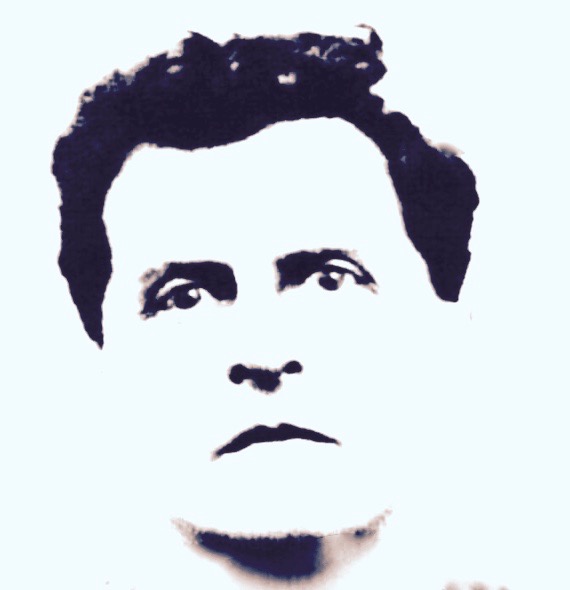
Ludwig was reared in a Roman Catholic home and did not have a strong Jewish identity as a young man despite having three Jewish grandparents. By coincidence, Ludwig and Adolf Hitler attended the same grammar school; although they were about the same age, they were two years apart as Ludwig was advanced a year and Adolf was held back a year in school. Some believe Ludwig is the Jewish boy who first provoked Hitler’s anti-Semitic rage as described in Hitler’s Mein Kampf. Others point out that Hitler probably wouldn’t have known Ludwig was Jewish at the time. Either way, it is likely Ludwig would not have thought much of his less accomplished contemporary at the school. If they met, it is doubtful Ludwig would have shown any sort of camaraderie to the young Adolf, and Adolf probably would have resented Ludwig on reflection even if he did not during their time at school together. Throughout his life, Ludwig could be brash, even to his friends, so it is easy to imagine how he may have treated those he saw as his inferiors. Bertrand Russell once wrote that Ludwig could be “destitute of the false politeness that interferes with truth.”

Regardless of whether Ludwig provoked Hitler, we can’t help but wonder the source of Ludwig’s own anti-Semitism. He identified as a Catholic but also deprecated himself in terms of his Jewishness, saying, for example, “Amongst Jews ‘genius’ is found only in the holy man. Even the greatest of Jewish thinkers is no more than talented. (Myself for instance.)” (Culture and Value, 1931). All writers and thinkers are plagued by self-doubt, and sometimes a free-floating anxiety seems to just hover around us waiting for a place to land. Perhaps this was a convenient way for Ludwig to explain his doubts and insecurities to himself, even if his assertion is demonstrably false, but he certainly had a complicated relationship with his own racial identity.

Ludwig similarly seemed to feel guilty for his staggering wealth. Thanks to his father’s ruthless business strategies, Ludwig was one of the richest people in Europe. He seemed to find his wealth problematic. Perhaps he believed money itself is corrupting or maybe he was ashamed of how his wealth was acquired. Whatever the case, he gave his money to his siblings and lived in famously stark accommodations.

His father, Karl Wittgenstein, was a wealthy industrialist who amassed much of his wealth through aggressive business dealings during the war between Russia and Turkey in 1878 (my info here is largely based on an essay by Jorn K. Brammann and John Moran, which can be found here). He emerged from his war dealings as the leader of the iron and steel industry with one of the greatest fortunes in Austria. Once established as a leader in industry, Karl pursued greater power through vertical integration and control, establishment of cartels, and gaining influence with financial institutions. Karl opposed government protection of consumers but sought government protection of entrepreneurs from foreign competition. His strike busting activities were described in Arbeiter-Zeitung, by declaring that the director evicted workers “with a lot of policemen, and the latter began the expulsion. The head of a family with four children was expelled late at night, when the children were already asleep in their beds. Sergeant Werner, a well-known enemy of the workers, mercilessly dragged them out of their beds, and they were made homeless.” Karl’s only apparent political ideology seemed to be to promote policies that would aid industrialists like himself in the search for wealth and power.

As an ostensibly Catholic family with seemingly limitless wealth and power, the Wittgenstein family might understandably feel insulated from the effects of world affairs. They may have felt that Hitler’s advance was no threat to them personally, but their safety was more precarious than one might expect, and protecting the sisters from Nazism required a significant bribe. In 1939, Ludwig and his only surviving brother, Paul, managed to convince Hitler to grant half-breed status to the daughters of Karl Wittgenstein in exchange for the gold and foreign currency held in Switzerland by a Wittgenstein trust (for more information, see here). At the time, Ludwig and Paul were both safely outside Austria. The amount of money transferred to the Nazis was significant and surely aided the continued advance of the Reich to one degree or another. Ludwig distanced himself from his own race, used his extreme wealth to buy privilege for his family, and likely helped the Reich survive, and perhaps we do not blame him for it.

Ludwig’s brother Rudi committed suicide, it is thought, after fearing he could be identified as a homosexual in a published study.  Rudi left a suicide note that referred to his “perverted disposition.” Ludwig had every reason to hide his own homosexuality. It was illegal, and the punishment could be devastating. Ludwig was a contemporary of Alan Turing, who was subjected to “chemical castration” by the British authorities, and his “treatment” led inexorably to his death by alleged or supposed suicide.  Ludwig’s own sexuality was secret and remains a source of speculation. Depending on who is telling the story, Ludwig falls somewhere on a continuum between being a homosexual who almost never engaged in physical sex to being a promiscuous gay man scouting about for anonymous sex. Each of the most extreme descriptions seems motivated by homophobia, and his sex life was probably much less interesting than either virtual celibacy or promiscuity would suggest. The existential threat to gay men was real, though, so being homosexual robbed one of any sense of safety and security.

Given the circumstances and the fact that he contemplated suicide often, it is amazing that Ludwig did not kill himself. Bertrand Russell wrote of Ludwig: “He used to come to my rooms at midnight, and for hours he would walk backward and forward like a caged tiger. On arrival, he would announce that when he left my rooms he would commit suicide. So, in spite of getting sleepy, I did not like to turn him out. On one such evening, after an hour or two of dead silence, I said to him, ‘Wittgenstein, are you thinking about logic or about your sins?’ ‘Both,’ he said, and then reverted to silence.” We might be tempted to say that philosophy saved Wittgenstein, and perhaps it did, but his philosophy offers little comfort, frankly, for his followers who read him with the hope of alleviating their own discomfort. Believe me, I would know.

Wittgenstein’s shame was ambiguous. We can’t fault him for the behavior of his father, his inherited wealth, his desire to save his sisters, his Jewishness, or his homosexuality, but, still, we can understand his shame. Wittgenstein finds expiation in the same evidence that condemns him. He devoted much of his life to trying to overcome ambiguity and paradox and to atone for his stained being, but declared that nothing unambiguous could be said about ethics. In his “Lecture on Ethics,” he said, “Ethics so far as it springs from the desire to say something about the ultimate meaning of life, the absolute good, the absolute valuable, can be no science. What it says does not add to our knowledge in any sense. But it is a document of a tendency in the human mind which I personally cannot help respecting deeply and I would not for my life ridicule it.” Ethics could not ameliorate his torment.

Despite his despair regarding both religion and ethics, one of his most trusted, and arguably more accomplished, students was Elizabeth Anscombe, a Catholic and dedicated ethicist who saw ethical rules as both absolute and universal. Wittgenstein named Anscombe as one of the literary executors of his estate. In responding to Oxford University’s decision to award Harry Truman an honorary degree, Anscombe wrote an open letter denouncing the honor. After the bombing of Japan, she argued that the intentional killing of innocent people is never justified, even if it results in some good. She asked, “Come now: if you had to choose between boiling one baby and letting some frightful disaster befall a thousand people—or a million people, if a thousand is not enough—what would you do?”

Wittgenstein’s entire life was a kind of penance. He was rich but gave his money away to avoid its corruption. He taught school. He was a gardener. He worked in a hospital. He served in the military. He tried to guide and protect the ones he loved. In the end, he aided the Nazi apparatus, brutalized children, and made those around him miserable. Describing his own life, he said, “I sit astride life like a bad rider on a horse. I only owe it to the horse’s good nature that I am not thrown off at this very moment.” (Culture and Value,  1939-40). He spent his years on earth devoted to determining what can be said precisely or how it can be possible to communicate, but he left us only with the same ambiguity he found so tortuous to begin with. When we study Ludwig’s life and words, we see no way forward. As such, Ludwig’s shame seems to serve no purpose.

Then again, perhaps Ludwig leaves us with some comfort, after all. We all carry our private shame, but that may be exactly what connects us to the rest of humanity. Ludwig wrote, “Of course, you must continue to feel ashamed of what’s inside you, but not ashamed of yourself before your fellow men” (Culture and Value, 1945). We need not be ashamed before our fellow humans because we are all flawed and seeking our own redemption. Some people run from their shame, some try to suppress it, some try to atone for it, and some, like Ludwig, do all three, but everyone has to manage it one way or another.

Hannah Arendt, who infamously had an affair with her Nazi professor, Martin Heidegger, said she was tempted to respond to people who were ashamed to be German by saying it made her ashamed to be human (see “Organized Guilt and Universal Responsibility”). Surely, Arendt had to manage her own shame, but she wasn’t paralyzed by it. She went on to say, “For the idea of humanity, purged of all sentimentality, has the very serious consequence that in one form or another men must assume responsibility for all crimes committed by men and that all nations share the onus for evil committed by others. Shame at being a human being is the purely individual and still non-political expression of this insight.” In the end, Ludwig’s shame was a political act, even if unconscious.

As human beings, I’m amazed we can live with ourselves at all. For a moment, in the late 20th century, some of us were able to convince ourselves that humans were evolving to a better state. We thought humans were becoming increasingly humane. Ludwig and Arendt both lived in times of terror, and both engaged with evil in one way or another. Against terrifying odds, the holocaust eventually ended, and we slowly came to believe we would not make such mistakes again. However, nothing exists in the world now to remind us of our optimism. We must rely on our old crutch, hope, so that we can do better in the future. Arendt urges us to feel shame for all of humanity because if we feel no shame, we also lose hope. Those who are shameless will seek to destroy our world, and only those of us filled with shame can save it.

Our shame, like Ludwig’s, may be ambiguous, but it serves a purpose. It is the source of our humanity and our only hope for salvation.


Review: John Gluck’s Voracious Science and Vulnerable Animals

The entire medical research enterprise is built on a foundation of intense and immense animal suffering. Most of the effective treatments we have now were previously tested on non-human animals before they were ever used on humans. On the other hand, most non-human animal research does not lead to an effective treatment or even publishable results.

In Voracious Science and Vulnerable Animals: A Primate Scientist’s Ethical Journey, John Gluck describes his glacially slow transition from primate researcher to animal welfare advocate. Early in his career, Gluck worked on the infamous monkey social-isolation experiments that provided the earth-shattering news that separating infants from their mothers and rearing them in isolation harms their emotional and intellectual development. Thanks to img_0327this ground-breaking research, mothers have learned not to raise their babies in small wire cages and occasionally perform painful surgeries on them.

In approximately the same amount of time it took for humans to evolve from other species, Gluck began to realize the great harm he was causing to his beloved monkeys. Gluck apprehended the harm he was doing after personally observing the excruciating suffering of the animals he was studying, seeing the shock in the eyes of non-scientists when he described his work and realizing that he could only describe his work to fellow scientists, having a student present him with Peter Singer’s accurate description of his work, having his lab broken into by animal rights activist, and, finally, talking with philosophers about the rights of animals.

The brilliance of his account is that he illustrates why it was so difficult for him to acknowledge the pain he was causing and why it is next to impossible to engage animal researchers in a debate over the welfare of research animals. Typically, animal researchers say they turn to non-human animals when it would be unethical to test on humans. When pressed, they will agree that animals should be used only when their use benefits the pursuit of scientific knowledge, should be given clean living quarters, should be fed appropriately, and should be given medical treatment when needed. Unless, of course, the scientist is studying the effects of food deprivation, lack of medical treatment, and so on.

The research is further justified by the fact that non-human animals have similar biological and neurological structures that ensure that results in non-human animals can be replicated in human animals. The human who doubts the similarity is scoffed at for being scientifically illiterate. Paradoxically, suggesting that non-human animals, similar to humans in other ways, are also similar to humans in terms of suffering or moral importance is accused of anthropomorphism. The argument is either that animals are not capable of suffering in any meaningful way or that their suffering is of no moral significance.

Gluck describes these arguments and explains that he himself held such seemingly contradictory views because they are taught and repeated ad nauseam until they become ingrained beginning with undergraduate study. Anyone who questions these basic beliefs is either met with laughter or denied entry and participation in research programs. People within the system become so closed off from contrary opinions that they are often surprised when descriptions of their work shocks and offends outsiders. The only explanation for the outrage many scientists will consider is that outsiders cannot understand the importance of their work.

One of the more fascinating events that led to Gluck’s change of heart concerned a human patient who was thought to be severely cognitively impaired. Staff in the patient’s room talked about the woman as if she were an object. Gluck was trying to solve a particular problem. At times, staff could feed the woman from a spoon but at other times she could not swallow. It turned out that she could swallow but was refusing to because she did not appreciate the way certain staff treated her. It was the only form of protest she had at her disposal. When Gluck realized how robust the conscious life of this patient was despite the appearance of minimal cognitive activity, he realized also that he could not say with certainty what thoughts, beliefs, or emotions non-human animals might experience.

Gluck eventually decided to get out of animal research and began teaching courses on research ethics that covered a variety of topics but included discussions of animal welfare. (If you care about the suffering of the animals in his lab, you will be disappointed by what happened to them.) Gluck’s educational programs on research ethics were successful in the sense that they attracted students from a myriad of disciplines and engaged both students and faculty in interesting and enlightening debate on the use of both human and non-human animals in research. Looking back, he is proud of his accomplishment to begin these discussions but admits that animal researchers were the one group that never engaged in the discussions.

Ethicists can attempt to change practices from inside or outside of institutions. Outsider ethicists have more freedom to make bold declarations of misconduct, express outrage, and threaten established practices. Insider ethicists have greater access and opportunity to speak directly with the people who have the power to change practices. Both kinds of ethicists are needed. Gluck is an insider whose thoughts and arguments were enhanced and supported by outsider ethicists. He says he was unable to effect a great deal of change inside research labs, but he was able to speak to researchers as an equal to engage in an ethical discussion. Sadly, insider ethicists who raise ethical alarms are often forced outside. It takes a great deal of courage to risk losing a privileged position inside the castle, and it also takes a great deal of courage to storm the castle gates.

If you are looking for a book with a detailed and comprehensive review of philosophical theory related to animals, you will be disappointed in Voracious Science and Vulnerable Animals; however, if you are looking for an insider’s perspective on the views and outlook of animal researchers, you will find Gluck’s insights and introspection fascinating, even if depressing. The book shows that it possible for researchers to be moved and gain compassion and understanding of the harm they are doing, but it also shows that such progress is slow and infrequent.