The Peace of Stoicism (#poem)

adult alone anxious black and white
Photo by Kat Jayne on Pexels.com

The Stoics all counsel the same.
Contemplate life and accept
Death without too much disruption.

They counsel the same when
You are overwrought, but
Flood you with a tsunami of tears
When their turn comes.

Seneca condemned his own sobs;
Confucius angrily defended his,
And I have forgiven them both.
Their failure is my comfort as my own
Tears pour over your last letter.

A New Riddle of Induction (#poem)

Screenshot 2019-06-02 at 08.26.47We have such unfounded confidence that
The future will be like the past that
We are constantly disappointed in the
Present. The future betrays us daily.

So I can’t be blamed for thinking you’d
Be here still—as you always were.
Thousands of observations told me
You were a survivor and, besides,

You promised you’d never leave.
My imagination has expanded
Regarding the regularity of nature,
But I still look for you in the

Morning Light.

Entelechy: How Universes Begin (#poem)

pexels-photo-1146134.jpeg
Photo by O1234567890 on Pexels.com

It seems the perfect arrangement,
All these particles, all this energy
Racing forward to some ultimate
Purpose.

All the minutiae of the universe
Explained by this motivation to some
Grand End in a race from potential to
Actual.

Possibilities reach out in an infinite
Expanse, a burgeoning desire exploding
From one dense core into an infinite array of
Minds.

Or one mind, maybe, with parts aware only of
Themselves, striving with a singular purpose—
To avoid pain. Or find pleasure. Meaning is
Contingent.

But some have started to regroup, and they are
Trying to draw us all in. Eventually, everything slides
Past the event horizon till our whimpers erupt with a
Bang.

On the Sixth Meditation and Montaigne (#poem)

black and white statue
Photo by Chait Goli on Pexels.com

The most wretched and frail of all creatures is man, and withal the proudest.” ~Michel de Montaigne

Budding literary critics are advised that
If they do not see sex in the text,
They should look for death
As these are the most common themes
In literature, but aren’t they really only
One theme? It isn’t an accident that an
Orgasm is known as “la petite mort.”

Consoling a friend who was temporarily
Overwrought by an awkward social situation,
I counseled that it was “only sex” in the end.
Implacable, he reminded me that many species
Only live long enough to pass on their genetic
Coding for future generations, and he was right enough.

Somehow sex is our defense against death,
And simultaneously against the dreariness of life.
The little death is a reprieve from the trial of life,
And some become addicted to constant, temporary
Destruction. Everyone on the pull is merely
Engaged in a frantic meditation on annihilation.

Montaigne’s frank discussions of sexual attraction and
Relations were so riveting that his essays became
Popular erotic reading for ladies of the court,
But I bet they skipped to their favourite parts,
As Montaigne’s essays seemed to be a free dispensary
For the ongoing flow of words, images, and doubts
Flowing through his mind moment to moment.

I must admit, I don’t think I ever read a Montaigne essay
From beginning to end, either. It’s so much easier to just
Dip a toe in here and there, and face lust, barbarity, and
Despair all in one go. This was a man who knew we are
Only animals with the same genetic-driven compulsions for
Procreation and pleasure as any mammal, though we may hide
Behind our idea of refinement, which is only a bias for doing
Things in the way in which we’ve become accustomed.

The Impact of Utilitarianism on Unsuspecting Feet (#poem #NaPoWriMo)

close up photography a baby s left foot
Photo by Dominika Roseclay on Pexels.com

The prompt today was to use a homophone or homonym. I can’t take credit for the example, which was offered by a former student.

After her purported reading
Of Jeremy Bentham,
She said he believed
She should do whatever
Made her happy.
For example,
She should spend
Her paycheck on new shoes,
Because they will be good
For her sole.

On the Disastrous Art of Losing (#poem #NaPoWriMo)

Kisa-GotamiOn our first meeting, she
Described me as a “near Buddhist,”
Meaning, of course, that I had
The ascetic qualities of a monk.
 
And it was true that Siddhartha
Helped me lose my appreciation
For things. You learn first that
Attachment is suffering.
 
But Elizabeth Bishop was more
On my mind. Like her, I had
Lost things every day, and
Most of them didn’t matter.
 
We all get practice losing things,
Of course, and we learn it isn’t
A disaster; lives are nothing
More than crude or elegant mandalas.
 
Everything will be wiped away,
And there is no use torturing
Ourselves with excessive hand-wringing,
Longing, covetousness, or desire.
 
Push on, let it go, they’re only things
After all, and the universe continues
With no pause. And still, I sit
Thousands of miles away
 
Thinking of you.

On the Destructive Power of Measureable Learning Objectives (#poem #NaPoWriMo)

pointing-devilDay 8 of NaPoWriMo asks us to write poetry using the jargon of our professions (or someone else’s profession). As a philosophy instructor, my only learning objective was to destroy the smug and self-satisfied confidence my students had in their own knowledge. Petty of me, I know.

Your destruction is both
Achievable and measurable
Because I’ve developed my
Learning objectives with care.

Eliot showed you fear
In a handful of dust,
But I will sow panic and
Confusion with only a question.

I will dash your gods
Against the rocks.
I will make you doubt
Your very existence.

Darkness will envelop you.
Your sure footing will erode
Into blind, directionless
Stumbling in a cavernous abyss
As your world dissolves in disillusion.

Eons of random events brought
Us to this moment and this
Particular arrangement of cosmic
Dust and energy, but only now
You realize you’ve lost your way.

I am the dark demon raising the spectre
Of wasted life, of a mind unmoored.
Your breakdown is the final
Documented learning objective.

Your own failed attempt at a
Meaningful life is the ultimate
Outcome-based assessment,
Yielding data for the ravenous
Sisyphean minions to chew
And regurgitate for eternity.

Pain in the Membrane (frivolous essay on the brain)

They say the pain is all in your head, but where else could it be? I mean, some people do complain of pain in their hands or elbows or knees or whatever, but really the experience of the pain is in their heads as a matter of perception. That’s why some people can claim to have pains in hands or legs that don’t exist. Or exist separated from phrenologythe rest of the body. The pain is in the head, or really the mind, which is probably in the head.

At least we think of our thoughts as being in our heads. When someone does something crazy, we say, “What got into your head?” or something like that. And our thoughts really do seem to be in our heads, except when they are thoughts of the pain that is in our feet after a long day of standing—or maybe the pain of anxiety.

Or the head might not have that much to do with it. Maybe thoughts and pains are in the mind, but the mind is nowhere near the head. Stranger things have happened. I mean, no one doing brain surgery ever found a mind sitting in a skull. You just find brains and stuff in there. And fancy brain scans give colorful and delightful images of brain activity, but not too much info on where the mind is. Pretty interesting things brains are, maybe interesting enough to make minds, but who knows? Honestly, the question never crossed my mind before (this is an obvious lie).

As a young philosophy student, a professor asked if I thought the mind was in the brain. I answered affirmatively. He asked why I thought that, because that is what philosophy professors do. I’m embarrassed to say I answered in a way that seems typical of young men—with a violent example. I said that if you smashed someone’s skull with a steel bat you would witness significant degradation to that person’s state of mind.

Without relying on violent examples, you have to admit that it is often hard to see a mind capable of pure reason in a person whose brain is seriously damaged. Brains really seem important to this discussion, you know? So perhaps all pain is in the head because all pain is in the brain, but what of my arthritic hands? Surely something in my hands is related to the pain in my brain (or my mind for the people still holding out hope for that).

When someone says the pain is all in your head they mean it is in your head and does not correspond to any injury outside of your head (you know, like a stubbed toe or something). The pain is in your brain and nowhere else. Some doctors, of course, will think this fact is enough to justify denying your pain all together and, more importantly, denying you any treatment for your pain. Because of that, your pain gets no sympathy, no consideration, no attention, or anything.

And that creates a pain in your heart, and by that I mean an emotional pain. We say emotional pain is in the heart, partly because our chests often hurt when we feel emotional pain, but I think emotional pain is also in the brain or the mind, wherever it is. Pharmaceutical companies seem to agree; antidepressants aren’t heart medications, are they?

No matter where the pain is, it is most definitely real, even if we can’t be sure the mind is real. You know the pain is real because it is hurting you, and you can’t be wrong about whether you are hurting. Show me where the pain is in your body.

Impossible. The pain just is. The pain is part of the universal pain. The pain is in stardust. The pain is free-floating. The pain is in the neurons. The pain is in the gluons. You are hurting. I share your pain. We are real. Suffering is infinite, and it is all in the mind.


Ricky Gervais and the Wrong Way to Grieve

After Life, created by Ricky Gervais, seems to be a quest to show just what it would mean to grieve in the wrong way. While grief counselors and well-meaning supporters will often assure us there is “no right or wrong way to grieve,” the central character, Tony, is destined to be an exemplar for how badly things can go when someone takes that advice to heart.

Tony recently lost his wife along with his will to live. Even without a will to live, though, he keeps living in spite of himself, partly because the dog needs to be fed. Maybe he really does feel an obligation to the dog, or he really wants to live, or he is just afraid to die. It doesn’t really matter why he keeps living, maybe, but several characters do make note of the fact that he does, in fact, find a reason to go on each day, even if he can’t say what it is.

So he goes on without wanting to live, which he feels gives him the freedom to do things he never would have done before. Of course, he always had the same freedom, but his suicidal ideation has now made him aware of it. The fact that suicide is on his mind tells him that if something he does causes things to get even more unpleasant for him, he will simply end it all.

This is, of course, a central tenet of existentialism, especially as articulated by Jean-Paul Sartre. Humans have radical freedom to choose their actions because they can annihilate themselves at any time. This annihilation can come in the form of suicide or simply choosing to become a different person. Sure, you can’t actually become a different person, but you can choose radically different actions, and we are defined by what we do.

Suicide is also the central question for another existentialist, Albert Camus, of course, but for Camus the question of suicide should challenge us to find meaning for our lives each and every day. If I’ve chosen not to kill myself today, I must have a reason. I should be aware of what it is I am living for. If it is just to feed the dog, then so be it.

But Tony isn’t so far along his journey yet. He’s engaged in a little game theory such as that discussed by Robert Nozick and other philosophers. He’s decided that being a decent person isn’t a good bet in the game of life. While it would be better if everyone were nice, that is not the case. Consequently, nice people consistently lose ground to the selfish people around them. Tony reasons it is better to be a rotten person benefiting from the kindness of a few naïve but altruistic people than to be a nice person expending energy on people and getting nothing in return.

So Tony is pretty awful to everyone around him. I don’t think there is any need for a spoiler alert here as this is all laid out in the first minutes of the first episode. Tony does some awful things that have awful consequences for people who come into his contact. Brief flashes of remorse or regret let us know an empathetic individual still lurks in there somewhere, but people risk real harm by coming into contact with Tony.

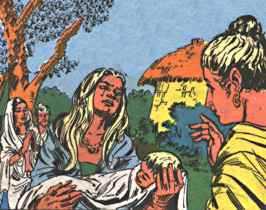
In the Parable of the Mustard Seed, Buddha tells the grieving Kisa Gotami to go to all her fellow villagers and collect a mustard seed from everyone not touched by grief. She returns empty handed, of course, as everyone is touched by grief. Like Kisa Gotami, Tony slowly learns this lesson, and it changes him.

In the end, though, I think existentialism drives the series more than Buddhism, but it is Simone de Beauvoir who gets the final say. Beauvoir believed, as did the other existentialists, that to be human is to be free if we constantly practice freedom as an act of will as Tony has decided to do. However, as we will ourselves to be free we must also recognize the freedom of others and will them to be free as well.

We must all suffer, but our suffering is shared by all those around us as both Kisa Gotami and Tony learn. Recognizing that means we will move forward with compassion and kindness, and that is the greatest freedom there is.

Doing Philosophy for Fun or Profit

I was recently invited to think about answering two questions: 1. What is philosophy? 2. How is philosophy done? Teaching first-year community college students for 17 years gave me ready answers, of course. Philosophy is a love of wisdom inspired by a sense of wonder about the world. Philosophy is an activity, not a study. It is a way of engaging with the world critically, not accepting things simply as they appear to be, and it is expanding the imagination to ask broader and deeper questions about reality.

These answers aren’t too bad for first-year students hearing of philosophy for the first time, but they seem fairly shallow for older adults who have already lived examined Despairlives and have also read the works of some of history’s most famous philosophers. A second approach might be to think of the work of professional philosophers working the field at the moment, some engaging in work so arcane and distant from everyday life that I wouldn’t even begin to know how to describe them.

Still, we do have public intellectuals who engage with social issues and try to help us navigate how to live just and meaningful lives. Kwame Anthony Appiah and Martha Nussbaum come to mind. Another group of philosophers are trying to answer basic questions about both consciousness and morality through experimentation—Joshua Green, for example. And some philosophers are doing their best to use an expansive and critical approach to science of the mind to develop a coherent philosophy of mind to explain what it means to be conscious at all (Patricia Churchland, for example).

But none of this answers either of the questions that sent me down this path. Most first-year philosophy students in the United States learn that Socrates is considered the father of philosophy—despite the fact that philosophers certainly existed before him. Nonetheless, Socrates is credited with establishing the foundations of philosophy by developing the practice of refutation. In this method, possible conjectures about the truth are offered, though not by Socrates, and then examined for possible flaws. Socrates, it would seem, was good at finding the flaws and refuting the conjectures of others, which made him quite unpopular in some circles.

It is worth noting that coming up with those conjectures in the first place might be an important function of philosophy, but refutation became cemented in our minds as a sort of negative function of philosophy. It doesn’t really give us answers to what our own existence is, but does tell us what it is not. The process of refutation invites a competition that can be demoralising to the person whose theories are being refuted. Some female philosophers have opined that this negative approach to philosophy is exactly the thing men would come up with. Women, they say, would use more collaborative approaches, which may be true—at least for some women. Many female philosophers have shown both the willingness and capability to engage in refutation with fervour. Christine de Pisan was refuting hither and yon in the 14th century.

Regardless of the importance of refutation, philosophy does seem to involve an ongoing conversation. Though philosophers often claim to lock themselves into a state of solitude (just look at Descartes for example), they rely just as much on interaction with other philosophers (see Descartes’ objections and replies). So, the proper method of philosophy must involve engagement, whether collaborative and constructive or competitive and destructive. So, philosophy is a kind of conversation with testing, challenging, and, one hopes, some degree of support—and maybe a little experimentation with fMRI’s and things of that nature.

And to what end do philosophers engage in this conversation? Is it to generate questions, generate answers, or to live a good life. Socrates must have believed that the practice of philosophy would help develop a good life, or he would not have declared so forcefully that the unexamined life is not worth living. Of course, not everyone agrees that the examined life is worth living, either, but maybe that is the kind of question philosophy can help answer.

Bertrand Russell offered a pretty convincing argument that philosophical questions can’t be answered because the ones that can be answered are scientific questions. From time to time technology and scientific experimentation move some questions from the realm of philosophy to the realm of science. In such cases, philosophers might offer a hand in interpreting the answers to such questions, which doesn’t seem like the grandest aspiration for philosophy—helping to interpret scientific findings.

I also don’t know that generating questions should be the ultimate goal of philosophy, either, but it is one I enjoy. I always used to promise my students that while other subjects would answer their questions about the given subject, philosophy would make them question the answers they already had and open up a slew of new questions. I once had a student challenge me and say that he was pretty sure everyone in the class knew what a human was and he couldn’t believe anyone would waste time asking about it. After asking a few questions about at what stage in mental deterioration one loses the rights they had as a functioning human, he agreed that the question did have important implications and could be difficult to answer. As promised, I failed to give him any clear answers to the question of what a human is, but I did give him more questions than he had expected.

I do think my life is better for the time I’ve spent engaging with philosophy and philosophers. If nothing else, philosophy has made me less sure of myself, and I think the world would be better if more people were less sure of themselves. Unfortunately, telling people they don’t know the answers to questions that pop up in everyday life is not always met with gratitude or praise. Socrates would agree.