Poetry Review: Eight Four: Poems on male suicide, vulnerability, grief and hope

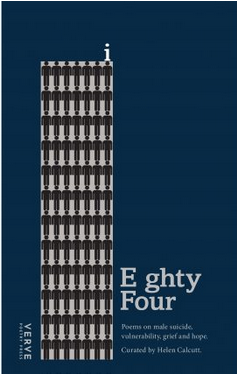
Screenshot 2019-05-29 at 06.00.27If you love men (or even just one man) or you have an interest in male suicide, male depression, male vulnerability, sacrificial masculinity, toxic masculinity or just good poetry, I really think you should pick up a copy of the poetry anthology Eight Four: Poems on male suicide, vulnerability, grief and hope.

Poet, critic, and university lecturer Helen Calcutt launched and curated the anthology after losing her brother to suicide. Verve Poetry Press published the anthology with proceeds benefiting the Campaign Against Living Miserably (CALM).

Suicide is the biggest killer of men under the age of 45 in the UK. The title of the anthology reflects the staggering statistic that suicide takes 84 men each week in the UK. The causes of suicide are many and varied, and you surely have your own opinions about prevention, but one paragraph from Helen Calcutt’s introduction stuck out for me:

“Women cry, men do not. Men hit women, women don’t hit men. Both examples of what we would consider a socially accepted norm, denies either party their natural complexity. Women do hit men, and though a violent and harmful act, it also highlights a particular type of vulnerability (perhaps a trauma too) that needs addressing. Men weep. It’s probably one of the deepest, moving sounds I have ever heard. Denying this as a normal attribute to male behavior, almost refuses them the bog-standard right to grieve, to shed a skin—to let it out.”

In the end, this is a book about grief but also hope. Many of the poems are from people who have experienced loss to suicide, some from those who experience or at least describe the feelings that lead to suicide, and some are about the possibilities for better lives and better approaches to male vitality.

I don’t want to quote or describe the poems as I think it takes from their power for the reader, but this book is not only for a great cause, it is great poetry. If you love poetry, you are likely to see names you recognise, but you may also be delighted to discover fresh talent. As you would expect, the poems are moving, but never maudlin or overly sentimental.
In Defense of Vile Rottenflush (#poem)

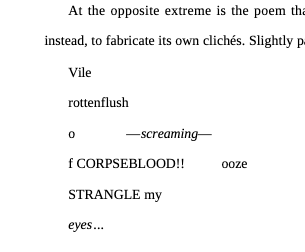
Screenshot 2019-05-24 at 12.51.15The venerable X. J. Kennedy used a poem about “vile rottenflush”

to illustrate bad poetry in his seminal textbook,
Introduction to Poetry.

The poem, he explains, was submitted to the equally venerable
Paris Review, but he does not credit (blame?) the author.
The poem about vile rottenflush, he clarifies, is too personal
and subjective to speak to anyone other than the person who wrote it.
He says, “the author has vented personal frustrations upon words,
instead of kicking stray dogs.”

Who am I to question the wisdom of someone
as accomplished as X. J. Kennedy?
I only know that I remember the phrase “vile rottenflush”
four decades after first hearing it. Also, I think the author of “vile rottenflush”
had witnessed a death of someone much loved, and anyone who has watched
the most cherished people in their lives die might understand the poem, after all.

I think this because the poem also mentions “corpseblood” and “ghastly stench.”
No one forgets the smell of a soul leaving the body.
And no one forgets what they see when life is flushed away.
Perhaps “rottenflush” was a novel way of avoiding the now
clichéd references to “putrefying flesh.”
Perhaps it is a way of reminding the readers
That our blood will cease to flow, pulse, and pump,
Only to be left to pool, drip, and stink.

The author of “vile rottenflush” might be accused of being too direct,
But not too personal. Which of us will not overwhelm
Post mortem viewers and handlers with our own
Ghastly stench, reducing them to cries or horror
As they see their fate clearly in our eyes?

Frequent Death and Daily Disquiet (#poem)

woman lying down
Photo by Hy Aan on Pexels.com

So many people died that year that I developed
A permanent anxiety about companion mortality.
Guns, cancer, fire, and water all took people from me.

After an absence of a few months, a friend once
Called just to say, “You thought I was dead,
Didn’t you?” My curse amused him immensely.

Once, as my infant son lay resting peacefully, I went
Over to check his breathing. His older brother
Reassured, “It’s okay, Daddy, he’s not dead.”

And you apologise for keeping me awake with
Your fitful sleep, but every cough, sigh, snore, or
Fart only reminds me you are with me awhile longer.

Ever since the change from that time of life,
You have thrown the covers off your body as
If they were on fire, inviting damp coolness

On your skin. As the sweat evaporates and
You slip into a sounder sleep, I touch your
Cool and immobile body with trepidation

Nightly. I don’t want to wake you and disrupt
Your peace, so I lie awake, fretting and alone, to
Ponder this nightly act of solicitous love.


A Pattern of Substance Misuse in Rural Texas (#poem)

woman holding a blunt
Photo by Alexander Krivitskiy on Pexels.com

You were always object lesson,
Never role model, and I only knew
I should never be like you.
Your death was early and tragic,
As expected, your last conscious
Moments spent reaching for the door
Of a home engulfed in flame.

Through tear-filled eyes,
Those who had nothing but
Criticism for you when alive
Expressed their own shock and
Grief with a final tinge of judgment.
“If it had anything to do with drugs,
I don’t even want to know,” they sobbed.

At that moment, I think I understood
Both false feeling and blaming the
Victim. No mention of your trauma,
Your alcoholic father, your abuse, or
Your desperate struggle for
Acceptance. For the first time,

I loved you.

If She Didn’t Like It (#poem cw/tw)

photo of woman wearing red striped shirt
Photo by Thgusstavo Santana on Pexels.com

She spotted him across the bar,
And her pulse quickened.
She wasn’t surprised to see him;
She knew he would be here,
But she stepped outside to finish
The joint she had started earlier.
After a few long drags, she
Went back in, downed a
Shot of tequila, and walked over.

She looked him straight in the eye,
Took his hand, and led him outside.
She firmly guided him to a dark spot,
Stared blankly into the dark, and
Unzipped his pants. He was full
Of confidence. “She couldn’t get
Enough, eh? Had to come back
For more of the good stuff.”

She was numb.
He was nothing.
He meant nothing.
It meant nothing.
It was only mechanical.
She wasn’t damaged.
She was strong,
Because she could
No longer feel.

If anyone accused him of
Rape,
He would say,
“If she didn’t like it,
Why’d she come back for more?”

On Perusing a Dictionary of Modern English Usage as It Pertains to Suffering

black and white book browse dictionary
Photo by Snapwire on Pexels.com

Deferring to the OED, Fowler’s* tells us not
To spell “inure” as “enure” for variant
Spellings are not needed; even if “inure”
Has two meanings, it is still only one word.
But who ever heard of “inure” relating to
Anything but some form of suffering?

Something quite beautiful and useful
Might well be put “in ure,” which just
Means we like this well enough to
Make a habit of it, and that cheers
Me up a little, as I had become inured
To “drudgery and distress” (Fowler’s
Example) and need reasons for joy.

You are thinking the primary usage
Became the primary usage because
The world has more misery than
Benefit, but maybe it is the other way
Around. Maybe language defines
Reality after all. If we had inured
All the good things all along,
Maybe we’d be in a better place.

If contemplating stuffy usage guides
Had inured, perhaps I wouldn’t have
Missed so many opportunities to be
Cheerful, to glide blissfully through
A life of Best Practices. Instead, I grew
Inured to heartbreak and dreary poets
Clamoring on about their lost loves.

*Fowler’s Modern English Usage, by H. W. Fowler, a handbook for pedants and arrogant copywriters.

The Best Way to Grieve for a Child (#poem #napowrimo)

brown bear plush toy beside pair of toddler s brown and white shoes on ground in selective focus photography
Photo by Max Schwoelk on Pexels.com

They never changed that room.
Dolls, teddy bears, trains,
And transformers all hold space,
Lock time in perpetual stasis.
When death comes life stops.

Family said they should pack
Things away. It’s too hard
To be reminded day after day
Of a future lost in the past,
But a room can be a memorial.

It’s a museum of childhood,
Until a child of a later
Generation discovers it with
Glee. New memories are
Born of innocent ignorance.

As the teddy bear rests again
In loving arms, life continues and
Memory grows sweeter and
Stronger through squeals,
Taunts, laughs, and hugs.

On the Disastrous Art of Losing (#poem #NaPoWriMo)

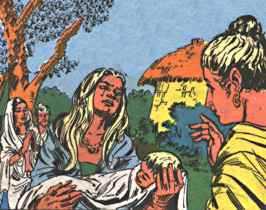
Kisa-GotamiOn our first meeting, she
Described me as a “near Buddhist,”
Meaning, of course, that I had
The ascetic qualities of a monk.
 
And it was true that Siddhartha
Helped me lose my appreciation
For things. You learn first that
Attachment is suffering.
 
But Elizabeth Bishop was more
On my mind. Like her, I had
Lost things every day, and
Most of them didn’t matter.
 
We all get practice losing things,
Of course, and we learn it isn’t
A disaster; lives are nothing
More than crude or elegant mandalas.
 
Everything will be wiped away,
And there is no use torturing
Ourselves with excessive hand-wringing,
Longing, covetousness, or desire.
 
Push on, let it go, they’re only things
After all, and the universe continues
With no pause. And still, I sit
Thousands of miles away
 
Thinking of you.

Life, Love, and Leaving in Livingston, Texas (#poem #NaPoWriMo)

Screenshot 2019-04-11 at 08.07.26In a previous century my grandfather died
Only weeks after my great uncle.
A few weeks later, my grandmother
Made a quick trip to the grocery store
And returned to find her house in flames.

Having lost her brother, husband, and home
In a matter of weeks, my uncle Skeet
(so known because as a child he was
No bigger than a mosquito or “skeeter”)
Tried to comfort his sister.

He was a country preacher with a small congregation
In the Piney Woods of East Texas, and he
Always turned to Jesus, of course, in times like these.
Attempting reassurance, he said, “Ain’t it wonderful, Sis?
This just shows that the Lord always watches over us.
No matter what, Jesus is always by your side.”

He meant, of course, that she was lucky not
To have been burned alive, but I sort of thought
The loss of everything she loved might have
Compensated for the joy of continued existence,
But people say I am just too negative.

In the current century, my grandmother
Eventually died just a few years short of
Becoming a centenarian, so I returned
To Livingston, Texas one last time.

As we gathered at my grandmother’s house
To mourn, one of my aunts complained bitterly,
“Well, we’re gonna have to fire our preacher,
‘Cause he keeps saying the BI-ble says to
Give our money to the poor. They can work for
Their own money like we did!”

Upon learning that one of her new in-laws
Was Mexican, she demanded, “Well, are ya
Legal? If you’re legal, it’s all right, but we
Don’t need any wetbacks in the family!”

I haven’t returned to Livingston, Texas.

Pain in the Membrane (frivolous essay on the brain)

They say the pain is all in your head, but where else could it be? I mean, some people do complain of pain in their hands or elbows or knees or whatever, but really the experience of the pain is in their heads as a matter of perception. That’s why some people can claim to have pains in hands or legs that don’t exist. Or exist separated from phrenologythe rest of the body. The pain is in the head, or really the mind, which is probably in the head.

At least we think of our thoughts as being in our heads. When someone does something crazy, we say, “What got into your head?” or something like that. And our thoughts really do seem to be in our heads, except when they are thoughts of the pain that is in our feet after a long day of standing—or maybe the pain of anxiety.

Or the head might not have that much to do with it. Maybe thoughts and pains are in the mind, but the mind is nowhere near the head. Stranger things have happened. I mean, no one doing brain surgery ever found a mind sitting in a skull. You just find brains and stuff in there. And fancy brain scans give colorful and delightful images of brain activity, but not too much info on where the mind is. Pretty interesting things brains are, maybe interesting enough to make minds, but who knows? Honestly, the question never crossed my mind before (this is an obvious lie).

As a young philosophy student, a professor asked if I thought the mind was in the brain. I answered affirmatively. He asked why I thought that, because that is what philosophy professors do. I’m embarrassed to say I answered in a way that seems typical of young men—with a violent example. I said that if you smashed someone’s skull with a steel bat you would witness significant degradation to that person’s state of mind.

Without relying on violent examples, you have to admit that it is often hard to see a mind capable of pure reason in a person whose brain is seriously damaged. Brains really seem important to this discussion, you know? So perhaps all pain is in the head because all pain is in the brain, but what of my arthritic hands? Surely something in my hands is related to the pain in my brain (or my mind for the people still holding out hope for that).

When someone says the pain is all in your head they mean it is in your head and does not correspond to any injury outside of your head (you know, like a stubbed toe or something). The pain is in your brain and nowhere else. Some doctors, of course, will think this fact is enough to justify denying your pain all together and, more importantly, denying you any treatment for your pain. Because of that, your pain gets no sympathy, no consideration, no attention, or anything.

And that creates a pain in your heart, and by that I mean an emotional pain. We say emotional pain is in the heart, partly because our chests often hurt when we feel emotional pain, but I think emotional pain is also in the brain or the mind, wherever it is. Pharmaceutical companies seem to agree; antidepressants aren’t heart medications, are they?

No matter where the pain is, it is most definitely real, even if we can’t be sure the mind is real. You know the pain is real because it is hurting you, and you can’t be wrong about whether you are hurting. Show me where the pain is in your body.

Impossible. The pain just is. The pain is part of the universal pain. The pain is in stardust. The pain is free-floating. The pain is in the neurons. The pain is in the gluons. You are hurting. I share your pain. We are real. Suffering is infinite, and it is all in the mind.