Exit Strategy (#poem)

“… come out of the wardrobe, cross the line of the rainbow and be who you want to be!” Dona Onete

After encouraging him to explore his “other side,”

She said, “If you leave me, I will tell about this,

And you will never see your children again.”keeping promises.jpg

And so it began—a desperate life locked

In a wardrobe guarded by a severe overseer.

Each tentative act of self-expression

Quashed in a confused melee of frustration.

He lived an inauthentic life of duplicity under duress,

With progeny held for ransom in

An unending act of passive aggression.

He lives behind a mask—

A promise keeper and provider—

As a pillar of the community,

A propagator of traditional value.

A leader is born in shame,

As he passes judgment on

His fellow sinners and wanderers,

He builds influence and takes on followers

Until his identity cracks,

And the anti-depressants fail

Along with his attempted suicide.

From hospital, he reads the headlines.

Everyone knows his name.

His warden and manipulator is now moot,

So he lifts himself off the pillow

And squares his shoulders

Before facing the inevitable question:

“If you were so miserable,

Why didn’t you leave?”

Ricky Gervais and the Wrong Way to Grieve

After Life, created by Ricky Gervais, seems to be a quest to show just what it would mean to grieve in the wrong way. While grief counselors and well-meaning supporters will often assure us there is “no right or wrong way to grieve,” the central character, Tony, is destined to be an exemplar for how badly things can go when someone takes that advice to heart.

Tony recently lost his wife along with his will to live. Even without a will to live, though, he keeps living in spite of himself, partly because the dog needs to be fed. Maybe he really does feel an obligation to the dog, or he really wants to live, or he is just afraid to die. It doesn’t really matter why he keeps living, maybe, but several characters do make note of the fact that he does, in fact, find a reason to go on each day, even if he can’t say what it is.

So he goes on without wanting to live, which he feels gives him the freedom to do things he never would have done before. Of course, he always had the same freedom, but his suicidal ideation has now made him aware of it. The fact that suicide is on his mind tells him that if something he does causes things to get even more unpleasant for him, he will simply end it all.

This is, of course, a central tenet of existentialism, especially as articulated by Jean-Paul Sartre. Humans have radical freedom to choose their actions because they can annihilate themselves at any time. This annihilation can come in the form of suicide or simply choosing to become a different person. Sure, you can’t actually become a different person, but you can choose radically different actions, and we are defined by what we do.

Suicide is also the central question for another existentialist, Albert Camus, of course, but for Camus the question of suicide should challenge us to find meaning for our lives each and every day. If I’ve chosen not to kill myself today, I must have a reason. I should be aware of what it is I am living for. If it is just to feed the dog, then so be it.

But Tony isn’t so far along his journey yet. He’s engaged in a little game theory such as that discussed by Robert Nozick and other philosophers. He’s decided that being a decent person isn’t a good bet in the game of life. While it would be better if everyone were nice, that is not the case. Consequently, nice people consistently lose ground to the selfish people around them. Tony reasons it is better to be a rotten person benefiting from the kindness of a few naïve but altruistic people than to be a nice person expending energy on people and getting nothing in return.

So Tony is pretty awful to everyone around him. I don’t think there is any need for a spoiler alert here as this is all laid out in the first minutes of the first episode. Tony does some awful things that have awful consequences for people who come into his contact. Brief flashes of remorse or regret let us know an empathetic individual still lurks in there somewhere, but people risk real harm by coming into contact with Tony.

In the Parable of the Mustard Seed, Buddha tells the grieving Kisa Gotami to go to all her fellow villagers and collect a mustard seed from everyone not touched by grief. She returns empty handed, of course, as everyone is touched by grief. Like Kisa Gotami, Tony slowly learns this lesson, and it changes him.

In the end, though, I think existentialism drives the series more than Buddhism, but it is Simone de Beauvoir who gets the final say. Beauvoir believed, as did the other existentialists, that to be human is to be free if we constantly practice freedom as an act of will as Tony has decided to do. However, as we will ourselves to be free we must also recognize the freedom of others and will them to be free as well.

We must all suffer, but our suffering is shared by all those around us as both Kisa Gotami and Tony learn. Recognizing that means we will move forward with compassion and kindness, and that is the greatest freedom there is.

Support the Troops (Remembrance Day Poem)

A farmer working in a field with his children formed

A bucolic scene in the countryside, maybe.Screenshot 2018-11-10 at 06.23.15

An older man crashed his bicycle and

Injured his leg, or so it would seem.


On the first tour, these scenes did not

Seem so ambiguous. The world

Had not given over to chaos then.

A soldier might still pass with a sense of purpose.


On the second tour, doubt set in,

And the soldiers sometimes faltered

In indecision–perhaps the wedding

Party was filled with combatants.


On the third tour, everyone is

A combatant. Everyone must die.

The universe is infinite and absolute

Hostility, death the only possible escape.


He asked whether I thought US soldiers

May have committed atrocities.

I asked whether he had support

For his mental health needs.


He answered only with

A desperate, pleading smile.


Writing Through Illness and Grief Group

While mourning his daughter Tullia, Cicero took to writing a book of self-consolation. Thinking himself the inventor of this type of self-help, he said, “Why, I have done what no one has done before, tried to console myself by writing a book.” (This is quoted by Han Baltussen in the Nov. 2009 issue of Mortality in an essay titled, “A grief observed: Cicero on remembering Tullia.”)

I certainly don’t think Cicero was the first to console himself by writing, but he seemed to find it of value, and many after him have repeated the exercise. Writing can be a way of releasing out inner torment when faced with grief or illness.

If you use or have used writing as a consolation, I’d like to invite you to join the Writing Through Illness and Grief group on Facebook (https://www.facebook.com/groups/256668978211572/). If you are not on Facebook but are interested in participating in other ways, please contact me at Randall@ethicsbeyondcompliance.com.

#PleaseHearWhatImNotSaying Poetry Anthology and Me

I am thrilled to have two poems in the new anthology, “Please Hear What I’m Not Saying,” edited by poet Isabelle Kenyon. The profits of the anthology will benefit the UK charity, MIND, which promotes mental health services and support while also working to reduce the stigma around mental illness. If I’m completely honest, I’m most excited to have my poems in the anthology because it is the first time any of my poems will appear in print anywhere, so I’m grateful to Isabelle for that.

Secondly, though, mental illness is a subject with deep meaning for me personally, whichhear what I'm not saying is why I decided to submit to the anthology in the first place. It is my personal belief that 100 percent of people experience mental illness at one time or another, but a fairly high percentage of us struggle for longer periods or with deeper pain. Over the course of my life (57 years as I write), I’ve had many happy times, but I have also been diagnosed with major depression, general anxiety disorder, insomnia, high blood pressure, migraine headaches, and the all-inclusive diagnosis of “stress.” In addition, I’ve pretty much diagnosed myself with Avoidant Personality Disorder just because I relate to every item on the list of diagnostic criteria.

If you look up statistics, you find that more women report depression, but more men die from suicide. You can make up your own mind about why this is the case, but I can tell you that over the years I have been told that my depression was a “luxury” and that it made me seem weak, pathetic, and selfish. If other men get the same message, it isn’t too surprising that fewer men report being depressed. When they do report mental illness, fewer services are aimed at them. Even when services are available to both men and women, the décor of offices and language of materials often has a stereotypically feminine feel that makes men feel unwelcome.

All of this makes me especially sensitive to the high-price of masculinity. We hear quite a bit about toxic masculinity, but toxic masculinity is a by-product of what philosopher Tom Digby calls sacrificial masculinity. Men are taught from the crib to ignore their own physical and mental health. In the past, men ignored their health in order to be better protectors and providers. Increasingly, emotionless brawn is less needed and less valued in society, so men are left with poor mental health with no obvious purpose, which only exacerbates the problem.

For a time, I facilitated men’s bereavement groups, and all the men said some version of the following: “I’ve been told how I’m not supposed to grieve (crying and emotional breakdown), but no one tells me how I am supposed to grieve.” Almost every man in every group I facilitated broke down in tears, and almost every one apologised for it. For this reason, I think if we can fight like men, we must learn to cry like men. Although I haven’t been successful at getting others to use it, I occasionally post information on men’s mental health with the hashtag #CryLikeAMan.

The anthology will be available from 8 February 2018.


Poetry Anthology benefits UK MIND

I was fortunate enough to be included in Isabelle Kenyon’s new poetry anthology supporting the mental health charity, UK MIND. I was happy to participate in the project because I think any effort to remove stigma around mental illness and to provide support for those suffering is a good and necessary thing to do. I don’t think I am unusual, really, but I’ve had my bouts with depression, anxiety, avoidance and attendant health problems. The more open we can be about our struggles, the easier it will be for hear what I'm not sayingus, collectively, to cope. I’m very grateful to Isabelle Kenyon for her efforts, which she describes below.

______________________________________

Isabelle Kenyon is a Surrey based poet and a graduate in Theatre: Writing, Directing and Performance from the University of York. She is the author of poetry anthology, This is not a Spectacle and micro chapbook, The Trees Whispered, published by Origami Poetry Press. She is also the editor of MIND Poetry Anthology ‘Please Hear What I’m Not Saying’. You can read more about Isabelle and see her work at www.flyonthewallpoetry.co.uk

Thank you to Randall Horton for letting me guest blog today! I wanted to spread the word about the MIND Poetry Anthology, which I have compiled and edited. ‘Please Hear What I’m Not Saying’ will be out in early February, expected date of release to be Thursday the 8th, on Amazon. The Anthology consists of poems from 116 poets (if I include myself!) and the book details a whole range of mental health experiences. The profits of the book with go to UK charity, MIND.

The book came about through my desire to do a collaborative project with other poets and my desire to raise money for a charity desperately seeking donations to cope with the rising need for its work. I received over 600 poems and have narrowed this down to 180.

As an editor, I have not been afraid to shy away from the ugly or the abstract, but I believe that the anthology as a whole is a journey – with each section the perspective changes. I hope that the end of the book reflects the ‘light at the end of the tunnel’ for mental health and that the outcome of these last sections express positivity and hope.


The Science and Sexism of Man-Flu

I don’t remember when I first heard the expression “man-flu,” but it has been around a few years now. Generally, it expresses the view of many women that men whine and complain when felled by the flu, but women soldier on undaunted by a little thing like a flu virus. Even women who consider themselves feminists will trot out man-flu as evidence that women are stronger and more resilient than men.

After this went on for some time, men rejoiced when a study published in the American Journal of Physiology claimed that women’s stores of estrogen spared them the worst effects of flu and helped them fight off the virus. Men could stop apologizing for theirIMG_0398 suffering and just continue whining and demanding attention, because the man-flu was real after all.

But, of course, some researchers pushed back. An article in STAT in March 2017 boldly asserted that the scientific evidence for man-flu was overblown. If women have stronger immune responses, it said, they will have more severe symptoms, as it is the immune system that causes sneezing, coughing and other flu symptoms. More telling, though, is the final statement in the article. The article quoted immunologist Laura Haynes of the University of Connecticut, who said, “Maybe men just get whinier.”

“Whiny” is a rough scientific category to pin down, but in this case I guess “whiny” means a man expressing pain out of proportion to his suffering. For any study to determine whether men suffer from flu more than women, it would have to quantify and measure the subjective experiences of men from across the globe. I’m not saying it can’t be done, but I am saying it has not been done.

Given the fact that we can’t actually know who suffers more from the flu and the fact that we actually don’t know who complains about it more (anecdotal evidence from women who just happen to live with men lacks a bit of rigor, I think you will agree), I propose to blame another culprit: patriarchy.

It just might be true that men seem to complain more because they are expected to never complain at all. Men are expected to be stoic and unaffected by pain and suffering. This may be at least one reason women take 50 percent more sick days than men. When men show any crack in their invulnerability, they are mocked by other men, by women, and even by feminists.

So, the term “man-flu” may just be another way of saying someone failed the test of the patriarchy to fulfill the demands of sacrificial masculinity. If you support gender equality, phrases such as “man-flu” and “man-up” can only hurt your cause.

Reid Ewing and the Failure of Autonomy in Bioethics

Reid Ewing of Modern Family fame recently wrote publicly about his struggle with body dysmorphia in a personal essay on the Huffington Post. Ewing revealed that his dysmorphia led him to seek and receive several surgeries. He feels his surgeons should have recognized his mental illness and refused to perform surgery. He wrote, “Of the four doctors who worked on me, not one had mental health screenings in place for their patients, except for asking if I had a history of depression.”

The principle of autonomy is by far the most discussed principle of bioethics. Discussions typically focus on the rights of patients to refuse treatments, not to seek them. On either side, the issues can be thorny. If a depressed and suicidal patient refuses life-prolonging treatment, is it ethical to respect the patient’s autonomy or should mental health services be provided first? As in Ewing’s case, the ethical problem arises from the claim that the decision is driven by mental illness and not reason. If someone is mentally ill, they are not fully autonomous agents as they are not fully rational.

This is a problem with autonomy in general. Our ideas of autonomy come largely from Immanuel Kant, who claimed that all rational beings, operating under full autonomy, would choose the same universal moral laws. If someone thinks it is okay to kill or lie, the person is either not johnny-automatic-gloved-hand-with-scalpel-800pxrational or lacks a good will. How do we determine whether someone is rational? Usually, most of us assume people who agree with our decisions are rational and those who do not are not rational. If they are not rational, they are not autonomous, so it is ethical to intervene to care for and protect them.

Earlier this year, a woman named Jewel Shuping claimed a psychologist helped her blind herself. She says she has always suffered from Body Integrity Identity Disorder (although able-bodied, she identified as a person with a disability). Most doctors, understandably, refuse to help people damage their healthy bodies to become disabled, which can lead clients to desperate measures to destroy limbs or other body parts, sometimes possibly endangering others.

Jewel Shuping never named the psychologist who may have helped her, so it is impossible to check the story. It is possible to imagine, however, that some doctors would help someone with BIID in the hopes of preventing further damage to themselves or others. Shuping says she feels she should be living as a blind person, and she appreciates the help she received to become blind. In contrast, Ewing feels he should have undergone a mental health screening before he was able to obtain his surgery and that his wishes should not have been respected.

Plastic surgeons are often vilified as greedy and unscrupulous doctors who will destroy clients’ self-esteem only to profit from their self-loathing. On the other hand, these same plastic surgeons are hailed as heroes when they are able to restore beauty to someone who has been disfigured in an accident or by disease. Unfortunately, we do not have bright lines to separate needless surgery to enhance someone’s self image and restorative surgery to spare someone from a life of social isolation and shame. Some would argue the decision should not be up to the doctors in the first place but should be left in the autonomous hands of clients.

Many have similarly argued that doctors should refuse gender confirmation surgery to transgender men and women. As with BIID, many assume that transgender individuals are mentally ill and should see a mental health professional, not a surgeon. Transgender activists (and I) argue that transgender individuals need empowerment to live as the gender that best fits what they actually are. If surgery helps them along that path, they should have access.

All this leaves us with the question of when to respect autonomy and when to take the role of caregiver, which may involve a degree of paternalism (or maternalism for that matter). Is it more important for doctors who ensure the patient’s rights to seek whatever treatment they see fit, or is it more important to provide a caring and guiding hand to resolve underlying mental health issues before offering any treatment at all?

One of Ewing’s complaints is that he was offered plastic surgery on demand with no screening at all. The process for people seeking gender confirmation surgery, by contrast, is arduous. Before surgery, transgender people go through counseling and live as their true gender for an extended period of time. At the far end of the spectrum, people with BIID rarely find doctors willing to help them destroy parts of their bodies and resort to self-harm. These three cases are not the same, but make similar demands on the distinctions between respect for autonomy and a commitment to compassionate care.

It seems reasonable to accept Ewing’s claim that mental health screenings should be a part of body modification surgery, especially when someone has no obvious flaws that need to be repaired. In all these cases (dysmorphia, gender identity, and BIID), mental health support is necessary. In each case, patients describe depression, emotional turmoil, and, too often, thoughts or attempts of suicide. Mental health care does not require a violation of autonomy, but it may help a person’s autonomous decisions to form more clearly from deliberation and not desperation.


How to Grieve for a Child: Al-Kindi’s Advice

While philosophers seem to thrive on conflict and would really have nothing to say at all without substantial disagreements, they are remarkably consistent on how to respond to death, dying, and loss. Most recently, I have turned to the work of Al-Kindi , who lived Al-kindifrom about 801 to 866 in Baghdad, for advice on how to respond to grief. Al-Kindi gives us the example of the mother of Alexander the Great.

As his death approached, Alexander wrote to his mother to prepare her for the loss of her child. As Al-Kindi tells it, Alexander said, “Do not be content with having the character of the petty mother of kings: order the construction of a magnificent city when you receive the news [of the death] of Alexander!” Everyone in Africa, Europe, and Asia should be invited to a great celebration of his life with one proviso, that anyone struck my similar misfortune should not come. After his death, his mother was mystified that no one obeyed and attended the funeral until someone pointed out to her that no one had ever escaped the type of misfortune she was experiencing and those with similar losses were told not to come.

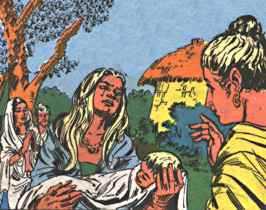
Al-Kindi says Alexander’s mother exclaimed, “O, Alexander! How much your end resembles your beginning! You had wanted to console me in the perfect way for the misfortune of your death.” This story of consolation is similar to the Buddhist parable of Kisa-GotamiKisa Gotami who lost her young son and was advised by the Buddha to collect a mustard seed from every family that had not lost a close relative. Of course, she was unable to find any family that had not faced loss, so she realized her suffering was universal and took comfort in the teachings of Buddhism.
German philosopher Arthur Schopenhauer, himself influenced by Buddhist texts, also points us to the suffering of others for comfort: “The most effective consolation in every misfortune and every affliction is to observe others who are more Schopenhauerunfortunate than we, and everyone can do this. But what does that say for the condition of the whole?” Indeed, the suffering of others may make us feel petty for our complaints, but it does little to relieve our pessimism about life. But maybe we just cling to life too tenaciously.

Al-Kindi tells us that all our possessions are only on loan to us and that “the Lender has the right to take back what He loaned and to do so by the hand of whomever he wants.” He says we should not see our loss as a sign of disgrace; rather, “the shame and disgrace for us is to feel sad whenever the loans are taken back.” He is speaking of possessions in this instance, not of children, but I’ve heard many people say that our children are only “on loan” from God, who can call them home at any moment. I personally have never found any comfort in this, and I wonder whether anyone has ever felt the brunt of loss softened by the thought of a merciful God calling in His loans.

No matter what happens, Al-Kindi tells us we should never be sad, as sadness is not necessary and “whatever is not necessary, the rational person should neither think about nor act on, especially if it is harmful or painful.” Many philosophers echo this sentiment. We should trust that God has created the world that is perfect according to God’s design; therefore, we should accept the vicissitudes of life with equanimity. This advice is almost universally dispensed and almost universally not followed for a simple reason: sadness is really an involuntary reaction to loss and pain.

Al-Kindi tells us the death is not an evil, because if there were no death, there would be no people. By extension, if what is thought to be the greatest evil, death, is not evil, then anything thought to be less evil than death is also not evil. As such, we have no evil to fear in our lives. From these assertions, Al-Kindi claims that we bring sorrow to ourselves of our own will. A rational person would not choose such a form of self-harm, so depression and mourning can be controlled through the proper exercise of reason.

Most ancient philosophers, and many contemporary ones, will tell us that letting our rational nature rule our emotional nature will ease our pain in the face of loss. Certainly, a rational examination of death, life, and loss helps us to make sense of our suffering, but it does not eliminate suffering. In fact, if you see grief as a moral failing, which many thinkers have said it is, I believe your suffering is compounded. Grief, hard enough to bear on its own, becomes a catalyst for an explosion of guilt and shame.

While it is important to examine the causes of our suffering and explore what meaning loss brings to our lives, denying the necessity of grief is as useless as denying the necessity of breathing. While I can accept that Al-Kindi’s description of death is accurate, it only helps me come to terms with the prospect of losing my own life. For each of us, our own death brings a promise of relief, but the death of our loved ones only brings relief when they are so burdened by suffering that we can no longer bear to see life oppressing them.

Death is still an evil, because it robs me of the people that make my life meaningful. It threatens to rob me of the people, indeed, who may make my life bearable. It is possible to imagine that death is not an evil, but, more importantly, we must recognize that love is certainly a good, and to lose those we love is an excellent reason to mourn. Mourn freely, I say, without guilt and without shame.

Performing masculinity and grief: A death of my own

When I was fifteen years old, my 25-year-old uncle died in a fire

While some older adults had feared for his well being for some time, his death was sudden, unexpected, and extremely traumatic for me. In times of grief, we all experience mixed emotions, but I was overwhelmed by feelings of confusion and isolation.

In the days following his death, my time was spent among both close and distant relatives in the home of my grandparents. When people interacted with me at all, it was generally to tell me to give comfort to someone else (“Go hug your grandfather.” “Hold your grandmother’s hand.”). I did my best, and I got through it. I had been to funerals before, but this was the first time I was so close to the deceased and so aware of the judgments of the people attending the funeral and receptions at the home later. Someone, usually a woman, didn’t cry enough or dared to wear pants to a funeral. Someone else, usually a man, fell to pieces and couldn’t keep it together. Certain friends should not have dared to show their faces, and others had no excuse for not coming. Or so it was stated by the chorus of judgment and scorn.

I tried my best to assimilate funeral normativity, but it really didn’t make sense to me. Years later, I cried at my grandfather’s funeral. This seemed a reasonable to me, and I didn’t predict being judged for it. After the funeral, one of my relatives asked me what I did for a living. I told her I was a writer. She said, “I knew you must be some kind of sensitive artist or something.” So much for the freedom to openly grieve for a close relative at his funeral. Do women face this kind of judgment?

But men who do not express emotions openly aren’t free from judgment or consequences, either. Kenneth Doka, an expert of grief counseling, said in an interview, ‘We do a strange thing with grieving styles. I always say we disenfranchise instrumental grievers early in the process. “What’s wrong with this person? Why isn’t he crying?”’ The man who manages his grief by working through it with projects, helping others, and so on is ignored. The man who emotes openly is criticized. Doka points out that more emotive grievers are penalized later (Why isn’t she over it yet?).

My uncle’s funeral may be when I first developed my revulsion at smug hypocrisy and self-righteous pity. I can remember one aunt declaring, loudly, “Well, if his death had anything to do with drugs, I just don’t want to know about it. That is not what is important now.” And this may also be when I first became aware of paradox. If she believed what she said, she would not have said it, and if she said it, she obviously didn’t believe it. (And a lifelong love of philosophy is born.) Anyway, I also developed my own sense of righteous indignation toward people who couldn’t offer condolences without poking people with daggers in the process.

In my first experience with traumatic grief, the people I would normally turn to for emotional support were all overwhelmed emotionally and intellectually. I don’t blame or resent anyone for it, but I was alone with my grief and my first experiences with this kind of loss. Shortly thereafter, an acquaintance was killed in a motorcycle accident, and I just never took the continued existence of anyone for granted again. I also accepted grieving as a solitary activity.

The next traumatic loss I experienced was described in an earlier post. My niece and nephew drowned on Mother’s Day (May 10) in 1992. The single most striking feature of this grief experience for me is the memory of many friends, coworkers, and family members coming to me to express their condolences and sincere concern for the suffering and recovery of my ex-wife. People lamented that it must be extremely hard on my wife, and I was admonished to take good care of her, as her suffering must be immense. I tried to do those things, of course, as I tried to manage my own emotions and continue to care for my children (I was an at-home dad at the time) and maintain a functioning household.

During this time, I had thoughts that terrified me and flooded me with shame. I began daydreaming, almost longing, for the death of someone who would be important to no one but me. A death that would bring me the kind of comfort and concern that had been reserved for my ex-wife during what was certainly the most challenging and traumatic event of my life to that point. I was horrified to think that I could wish anyone dead. Of course, no one in the world is important only to me. Everyone I love is loved by others as well. Further, I wouldn’t trade any of my loved ones for “good grieving.” (I will add that one friend in particular stood by me and cared for me throughout.)

The true fantasy, of course, was that someone would step in to help me through my current grief, not that I wanted anyone to die. Still, these thoughts became pervasive and persistent enough to plague me with guilt and interfere even more with my recovery. What I really wanted was to receive the same support I was expected to give. I don’t really want to be the only person in the world being cared for; I just want a reciprocal arrangement. I don’t know whether every man feels the same way, but I know I’m not the only one.

Why is it that being a man is to be sentenced to a life bereft of emotional support? When women say they want to meet a sensitive man, they generally mean they want to meet a man who attends to their emotional needs, not a man who openly expresses his own emotional needs let alone a man openly expresses his emotional frailty.

I dream of a world where grief is not gendered and where masculinity is not marked by solitary sorrow.